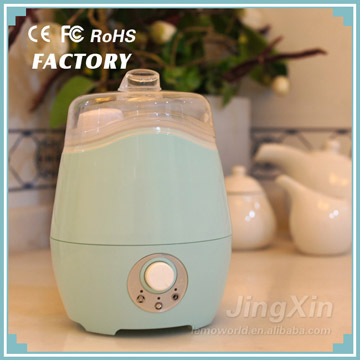
Air Purifiers
Source premium Air Purifiers from vetted suppliers and manufacturers across Asia. Designed for importers, wholesalers, and brands seeking reliable OEM and private-label production, our network delivers scalable manufacturing solutions. Secure competitive pricing, certified performance, and compliant products for your market.
Sourcing air purifiers at scale requires navigating a complex intersection of airflow dynamics, filtration media quality, and strict electrical safety standards. The primary challenge for buyers is ensuring that a factory's marketed specifications—particularly the Clean Air Delivery Rate (CADR) and noise levels—hold up under independent testing, rather than just existing on a specification sheet.
Core Specifications and Performance Metrics
When evaluating manufacturers, focus on the engineering fundamentals that dictate performance. A purifier is essentially a specialized fan pulling air through resistance (the filter). Balancing high airflow with low noise and high filtration efficiency is where top-tier factories separate themselves from basic assemblers.
- Clean Air Delivery Rate (CADR): This is the definitive metric for purifier performance, measuring the volume of filtered air delivered (usually in cubic meters per hour, m³/h, or cubic feet per minute, CFM). Ensure the factory tests CADR for specific pollutants: smoke, pollen, and dust.
- Motor Technology: Entry-level units typically use AC motors, which are cost-effective but consume more power and run louder. Premium units utilize Brushless DC (BLDC) motors. BLDC motors offer precise speed control, significantly lower decibel output at high speeds, and better energy efficiency.
- Sensor Accuracy: Smart purifiers rely on infrared or laser particle sensors to detect PM2.5 levels and adjust fan speed automatically. Laser sensors provide much higher accuracy and faster response times, though they add to the BOM (Bill of Materials) cost.
| Filter Grade | Efficiency (at 0.3 microns) | Typical Application |
|---|---|---|
| EPA 11 (E11) | 95% | Entry-level residential units |
| HEPA 13 (H13) | 99.97% | Premium consumer & medical-grade |
| HEPA 14 (H14) | 99.995% | Cleanrooms & specialized environments |
Need help verifying factory test chambers and CADR claims? We can audit supplier facilities on your behalf.
Talk to our teamManufacturing Quality and Assembly Controls
The effectiveness of an air purifier can be completely undermined by poor assembly. If the housing around the filter is not perfectly sealed, air will take the path of least resistance, bypassing the HEPA media entirely. This renders high-grade filters useless.
When conducting Quality Control & Inspection, inspectors must look beyond cosmetic defects and verify internal structural integrity and electrical safety.
Critical Factory-Level QC Checks
- CADR validation in a sealed 30-cubic-meter test chamber (AHAM or GB/T 18801 standards)
- Anemometer testing for airflow consistency across the exhaust grill
- Acoustic testing in a soundproof room to verify dB levels at all fan speeds
- Hipot (high potential) and earth bond testing for electrical safety compliance
- Smoke-test visualization to ensure zero air bypass around the filter seals
- Sensor calibration verification for PM2.5 and VOC accuracy
Customization and OEM/ODM Production
For brands developing private-label lines, OEM/ODM Services offer varying degrees of customization. White-labeling an existing factory mold is the fastest route to market, allowing you to customize the outer finish, user interface, and filter composition (e.g., adding a specialized activated carbon pellet layer for VOCs or formaldehyde).
Developing a custom mold (ODM) requires significant upfront tooling investment but allows for proprietary form factors and optimized internal airflow designs. If you are integrating IoT capabilities (like Tuya or custom app control), ensure the factory's PCBA supplier has a proven track record with stable Wi-Fi/Bluetooth modules, as connectivity dropouts are a leading cause of consumer returns.
Pricing, MOQs, and Lead Times
Air purifier pricing is highly dependent on motor type, filter size/grade, and smart features. Because filters are bulky and units require substantial protective packaging, freight efficiency is a major cost consideration.
Want to benchmark your current manufacturing costs or negotiate better terms? Let our sourcing experts evaluate your project.
Get a free consultationFrequently Asked Questions
Sourcing air purifiers requires strict attention to engineering tolerances and verifiable performance data. By focusing on certified components, rigorous assembly line sealing, and independent performance testing, buyers can secure reliable, high-margin products that perform exactly as advertised.
Get Sourcing Help for Air Purifiers
Tell us your requirements and our experts will connect you with verified manufacturers.